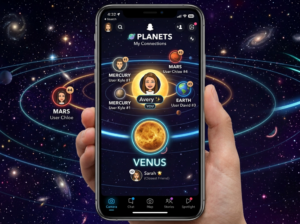
Most people obsess over Mercury. They want the #1 spot. The closest orbit. The bragging rights. But here’s something nobody talks about: Venus friendships on Snapchat are often the strongest ones.
Venus is the second planet in the Snapchat Friend Solar System. It represents your #2 best friend based on how frequently you interact through snaps, chats, story replies, and calls. You’re not the person they talk to the most. You’re the person they talk to almost the most. And that tiny gap between first and second? It’s smaller than you think.
This guide covers everything about the Venus Snapchat Planet, including what it looks like, what it says about your friendship, how to reach it, and why being #2 might actually be better than being #1.
What Does Venus Mean on Snapchat?
In the Snapchat Friend Solar System, you sit at the center as the Sun. Your top eight friends orbit around you as planets. Mercury is the closest. Neptune is the farthest. Venus sits right between Mercury and Earth at the #2 position.
If you tap the gold badge on a friend’s profile and see Venus, it means you’re their second-most-interacted-with friend on the entire platform. You snap them frequently, you chat regularly, and your engagement is consistent enough to hold a position just one step below their absolute closest connection.
Here’s the quick snapshot:
| Detail | Venus |
|---|---|
| Position | #2 Best Friend |
| What it means | Second highest interaction on Snapchat |
| Planet color | Light beige/soft tan |
| Emoji elements | Pink, blue, yellow, and purple hearts |
| Additional visuals | Subtle sparkles and glowing effects |
| Bitmoji placement | Sitting or leaning on the planet |
| Subscription required | Yes, Snapchat+ only |
Venus isn’t something you choose. Snapchat’s algorithm assigns it automatically based on your real interaction data. The system recalculates roughly every 24 to 72 hours, so your position can shift depending on recent activity.
What Does the Venus Planet Look Like on Snapchat?
Venus has one of the warmest and most visually appealing designs in the entire solar system. While Mercury screams intensity with its bold red color, Venus feels softer, more emotionally layered.
Visual elements:
- Planet color: A soft beige or light tan, giving it a warm, approachable look
- Hearts: Multiple hearts in different colors floating around the planet. You’ll see pink, blue, yellow, and purple, which makes Venus the most colorful planet in the system
- Sparkles: Gentle glittering effects surround the planet, adding a sense of closeness without the aggressive energy of Mercury’s red glow
- Bitmoji: Your friend’s Bitmoji appears sitting on or leaning against the planet in a relaxed pose
- Overall feel: Warm, emotionally rich, and visually distinct from every other planet
The multicolor heart design is unique to Venus. No other planet in the Snapchat solar system uses this combination. Mercury has red hearts only. Earth has red hearts with a moon. Jupiter and beyond have no hearts at all. Venus sits in a sweet spot where the visual language clearly says, “This friendship is close, consistent, and emotionally connected.”
Why Venus Friendships Are Often Deeper Than Mercury
This sounds counterintuitive. How can the #2 friendship be deeper than #1?
It comes down to what each position actually measures. Mercury is driven by volume. The friend who sends the most snaps, replies the fastest, and maintains the longest streak almost always takes Mercury. That person might be someone you rapid-fire streak snaps with every morning, exchanging black screens with an “S” written on them.
Venus, on the other hand, often belongs to the friend you have real conversations with. The person you text when something actually happens. The one whose stories you reply to with genuine reactions, not just a fire emoji. Your chat history with a Venus friend tends to include longer messages, deeper topics, and more back-and-forth.
This doesn’t mean Mercury friendships are shallow. Many Mercury connections are both high-volume and emotionally deep. But if you’re someone’s Venus, don’t assume you’re “less important.” You might simply be interacting in ways that carry more emotional weight but slightly less raw frequency.
Think of it this way: Mercury is the friend you talk to the most. Venus is often the friend you talk to the best.
How Does Snapchat Decide Who Gets Venus?
The same algorithm that assigns Mercury handles Venus. Snapchat tracks multiple interaction signals and ranks your friends accordingly. The friend with the highest overall engagement score gets Mercury. The second highest gets Venus.
The key factors include:
Snap Frequency
How many snaps do you send and receive with this person daily? Venus holders typically exchange snaps very frequently, just slightly less than Mercury.
Chat Depth and Consistency
Regular, meaningful chatting is where many Venus friendships separate themselves. If you and a friend have genuine conversations multiple times a week, that chat activity builds a strong engagement score even if your snap count is slightly lower than Mercury’s.
Snapstreaks
An active streak reinforces daily interaction signals. Venus friends usually maintain streaks in the 80 to 150+ day range. The streak alone doesn’t guarantee Venus, but it strengthens the overall signal.
Story Engagement
Replying to stories counts as direct interaction. Watching without replying does almost nothing for your ranking. Venus friends tend to react to each other’s stories consistently rather than scrolling past them.
Voice and Video Calls
Calls add a weighted engagement signal that most users underestimate. A Venus friend who also calls occasionally has a much stronger position than one who only texts and snaps.
Reply Speed
How quickly you respond to each other matters. Fast, consistent reply times tell the algorithm the friendship is active and prioritized.
How to Become Someone’s Venus on Snapchat
If you’re currently sitting at Earth, Mars, or lower and want to reach Venus, here’s what actually works:
Daily private snaps. Send at least 3 to 5 personal snaps per day. Group snaps barely register in the algorithm. One-on-one snaps are what count.
Chat beyond streaks. Have actual conversations. Ask questions. Reply with more than one word. The algorithm notices chat depth, not just chat frequency.
Reply to their stories regularly. Make it a habit. Every story reply is a direct interaction signal that compounds over time.
Don’t break your streak. A broken streak causes ranking drops within 48 hours. If you’re climbing toward Venus, a streak break can set you back significantly.
Add voice calls to your routine. Even one short call per week adds an engagement signal that most of your competition for Venus isn’t providing.
Be consistent. Five snaps a day for three weeks will move your ranking more than 30 snaps dumped in one afternoon. The algorithm rewards steady patterns over random bursts.
Venus vs. Mercury: How Big Is the Gap?
Smaller than most people assume.
| Factor | Mercury (#1) | Venus (#2) |
|---|---|---|
| Interaction level | Highest on the platform | Very close to the highest |
| Typical streak length | 150+ days | 80-150 days |
| Chat style | High frequency, often brief | Slightly less frequent, often deeper |
| Visual design | Red planet, red hearts only | Beige planet, multicolor hearts |
| Emotional significance | “We talk constantly.” | “We talk deeply and often.” |
The difference between Mercury and Venus usually comes down to a small margin. Sometimes it’s as little as a few extra snaps per week. If you’re someone’s Venus, you’re extremely close to their #1. A small increase in interaction could push you to Mercury. A small decrease could drop you to Earth.
That volatility is important to understand. Venus is not in a locked position. It shifts with your activity.
Venus vs. Earth: Where the Drop-Off Starts
The gap between Venus and Earth is noticeably bigger than the gap between Mercury and Venus.
| Factor | Venus (#2) | Earth (#3) |
|---|---|---|
| Interaction level | Very high, almost daily | Regular, several times a week |
| Chat style | Frequent and substantive | Comfortable, low-maintenance |
| Streak status | Almost always active | Sometimes active, sometimes not |
| Visual design | Multicolor hearts, sparkles | Blue-green planet, moon, red hearts |
| Friendship feel | Close and emotionally connected | Steady and easy-going |
If you’re at Venus, you’re interacting almost every day. If you drop to Earth, the algorithm has detected a meaningful decline in frequency. The friendship isn’t gone, but the daily rhythm has slowed.
Can Venus Be One-Sided?
Yes. Just like Mercury, Venus can be completely one-sided.
You might be someone’s Venus while they’re your Jupiter or Saturn. The Friend Solar System calculates each person’s rankings independently. Your position in their system depends on how they interact with you relative to their other friends. Your system does the same calculation from your side.
This means two friends can occupy very different planets in each other’s solar systems. You could be their #2 while they’re your #5. It doesn’t mean the friendship is unequal in real life. It simply means your Snapchat activity is distributed differently.
The Best Friends badge tells you whether the connection is at least mutual at the top-8 level. If you see “Best Friends” on their profile, you’re both in each other’s top eight. If you see “Friends,” you’re in their top eight, but they’re not in yours.
The Emotional Reality of Being #2
Nobody talks about this, but being Venus can feel complicated.
On one hand, you’re someone’s second closest Snapchat connection. That’s impressive. Out of potentially hundreds of friends, you ranked #2. Most people would be thrilled with that position.
On the other hand, you’re not #1. And if you expected Mercury, seeing Venus can trigger a surprising amount of disappointment. Especially when you know who Mercury is. Suddenly you’re not just processing your own ranking. You’re comparing yourself to a specific person and wondering what they do differently.
This is the psychological trap Snapchat built into the feature. Rankings feel personal even when they’re purely algorithmic. Your Venus position might exist because Mercury sends 6 snaps a day and you send 5. That’s the entire difference. But emotionally, it reads as “someone else is closer to your friend than you are.”
If that comparison starts bothering you, here’s a grounding thought: Venus measures Snapchat taps. It doesn’t measure who your friend calls when they need help, who they trust with real problems, or who they’d choose to sit next to on a long road trip. App rankings and real relationships are two different things.
Common Myths About Venus on Snapchat
Myth: Venus means you’re losing your best friend. False. Venus is the #2 position out of someone’s entire friend list. Being second out of hundreds is not “losing” anything.
Myth: You need a Snapstreak to be Venus. Not necessarily. Streaks help, but consistent chatting, calling, and story engagement can hold Venus even without an active streak.
Myth: Venus always means the friendship is emotional. Not always. Some Venus friendships are high-volume and casual, just like Mercury. The emotional depth depends on the people, not the planet.
Myth: If you’re Venus, you’ll always stay Venus. Rankings update every 24 to 72 hours. If your activity drops or someone else’s increases, you can move to Earth or lower.
Myth: Your friend knows you’re their Venus. Only if they have Snapchat+ and check. The system is private. Nobody gets notified about planet assignments.
Frequently Asked Questions
What does Venus mean on Snapchat Planets?
Venus represents your #2 best friend in the Snapchat Friend Solar System. It’s assigned to the friend you interact with second most frequently through snaps, chats, story replies, and calls.
What color is Venus on Snapchat?
Venus appears as a light beige or soft tan planet surrounded by multicolored hearts in pink, blue, yellow, and purple. It also has subtle sparkle effects.
Is Venus good on Snapchat?
Yes. Venus is the second closest planet to the Sun, meaning you’re someone’s #2 best friend. Out of their entire friends list, only one person ranks higher than you.
What’s the difference between Venus and Mercury on Snapchat?
Mercury is #1 (closest friend, highest interaction). Venus is #2 (very close friend, slightly less interaction). Mercury shows red hearts on a red planet. Venus shows multicolor hearts on a beige planet. The interaction gap between them is usually small.
Can I move from Venus to Mercury?
Yes. Increase your daily snaps, chat more frequently, maintain your streak, reply to stories, and add voice calls. If your interaction surpasses the current Mercury holder, the algorithm will promote you within a few days.
Can Venus be one-sided on Snapchat?
Absolutely. You can be someone’s Venus without them holding any top position in your solar system. Each person’s rankings are calculated independently.
How do I know if I’m someone’s Venus?
You need Snapchat+. Visit their profile, look for the gold-ringed Best Friends or Friends badge, and tap it. If Venus appears, you’re their #2.
Does Venus change on Snapchat?
Yes. Planet rankings recalculate every 24 to 72 hours based on recent interaction data. Your Venus position can shift to Mercury (up) or Earth (down) depending on activity changes.