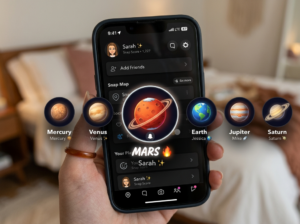
Not every friendship needs to be intense. Some of the best connections on Snapchat are the ones where you send each other memes at midnight, reply to stories with inside jokes, and snap random things throughout the week without any pressure to keep a streak alive. That’s Mars.
Mars is the fourth planet in the Snapchat Friend Solar System. It represents your #4 best friend based on interaction frequency. You’re outside the inner three but still solidly inside someone’s closest circle. And while Mercury, Venus, and Earth get all the attention, Mars is quietly the most enjoyable position to hold.
This guide breaks down everything about the Mars Snapchat Planet, what it looks like, what it says about your friendship, where it sits relative to the planets around it, and why being #4 is nothing to worry about.
What Does Mars Mean on Snapchat?
In the Snapchat Friend Solar System, your top eight friends orbit you as planets ranked by interaction frequency. Mercury is #1. Venus is #2. Earth is #3. Mars sits at the #4 position, right at the boundary between the inner circle and the middle tier.
If you tap the gold badge on a friend’s profile and see a red-orange planet with blue and purple hearts, you’re their Mars. That means you interact with them regularly but not as frequently as their top three friends.
Quick reference:
| Detail | Mars |
|---|---|
| Position | #4 Best Friend |
| What it means | Fourth highest interaction on Snapchat |
| Planet color | Red-orange |
| Emoji elements | Blue and purple hearts |
| Additional visuals | Small stars scattered around |
| Bitmoji placement | On or near the planet’s surface |
| Subscription required | Yes, Snapchat+ only |
Mars is the first planet where the heart colors shift away from red. Mercury and Earth both feature red hearts. Venus has multicolor hearts that include pink and warm tones. Mars introduces blue and purple hearts, which visually signal a different kind of connection. Less intense, more relaxed.
What Does the Mars Planet Look Like on Snapchat?
Mars is one of the easier planets to spot because its color is bold and distinctive.
Visual elements:
- Planet color: A vivid red-orange that closely resembles the real Mars. It’s deeper than Mercury’s bright red and carries a warmer, earthier tone
- Hearts: Blue and purple hearts float around the planet. This is the first planet in the system that moves away from red and pink heart colors entirely
- Stars: Small stars dot the background, fewer than Mercury or Venus but still present
- Bitmoji: Your friend’s Bitmoji appears on or near the planet, sometimes in a casual or playful pose
- Overall feel: Energetic, lighthearted, fun. The design communicates activity without intensity
The shift to blue and purple hearts is a deliberate visual cue from Snapchat. Red and pink hearts signal closeness and emotional warmth. Blue and purple suggest a cooler, more casual energy. You’re still someone’s friend. You’re still in their top circle. But the dynamic has shifted from “we talk about everything” to “we have a good time together.”
Why Mars Is the Fun Friend Position
Every friend group has that one person who makes things lighter. The one who drops a meme in the chat and suddenly everyone’s laughing. The one who sends random snaps of weird things they see during the day. The one who doesn’t need deep conversations to keep the friendship alive.
That’s the Mars energy.
Mars friendships on Snapchat tend to share some common traits:
- Meme exchanges over deep conversations. You send each other funny content more often than you discuss serious topics.
- Snap frequency that’s active but not obsessive. A couple of times a week rather than multiple times daily.
- Story replies driven by humor. You reply to their stories when something is genuinely funny or interesting, not out of habit.
- Chats that are short and punchy. Quick exchanges rather than long, drawn-out conversations.
- Streaks that exist casually or not at all. Some Mars friendships maintain a streak. Many don’t bother.
None of this makes the friendship less real. It just means the connection expresses itself differently than Mercury or Venus. Mars friendships are low-pressure, high-enjoyment, and refreshingly easy.
The Transition Zone: Inner Circle vs. Middle Tier
Mars occupies an interesting spot in the Snapchat solar system. It’s the last planet before the clear middle tier begins at Jupiter.
Think of it this way:
- Mercury, Venus, and Earth = Inner circle. High interaction, deep engagement, and daily or near-daily contact.
- Mars = Transition zone. Regular interaction that’s still strong but less demanding.
- Jupiter, Saturn = Middle tier. Casual, occasional contact.
- Uranus, Neptune = Outer planets. Minimal interaction.
Being at Mars means you haven’t fallen into casual territory yet. You’re still someone’s #4 out of potentially hundreds of friends. But you’re also not in the pressure cooker of the top three, where a single quiet day can shuffle rankings.
For a lot of people, Mars is actually the sweet spot. You’re close enough to matter. Distant enough to breathe.
How Does Snapchat Decide Who Gets Mars?
The same interaction algorithm that assigns every other planet handles Mars. Snapchat calculates an engagement score for each friend based on multiple signals, and the friend with the fourth highest score gets the Mars position.
The factors:
Snap Frequency
You’re exchanging snaps regularly but at a lower pace than the top three. A couple of times per week is typical for Mars friendships. Daily snapping would likely push you higher.
Chat Activity
Mars chats tend to be shorter and more casual than Earth or Venus conversations. You talk when something comes up rather than maintaining ongoing daily threads. The algorithm still counts this activity, but the lower frequency and shorter length contribute to a lower overall score.
Story Engagement
Replying to stories keeps your interaction signal active with minimal effort. For Mars friendships, story replies often make up a larger percentage of total interaction than for the inner planets. It’s the easiest way to stay visible in the algorithm without changing your natural behavior.
Streaks
Mars friendships can exist with or without streaks. If you have a streak, it helps maintain the position. If you don’t, other signals like chatting and story replies can compensate. The algorithm doesn’t require a streak for any specific position.
Calls
Voice and video calls are less common in Mars friendships but have an outsized impact when they do happen. A single call per week can be the difference between holding Mars and dropping to Jupiter.
How to Reach Mars on Snapchat
If you’re currently at Jupiter (#5) or lower and want to move up to Mars, these steps will help:
Snap them at least 2 to 3 times per week. Private snaps, not group snaps. Consistency matters more than volume. Don’t send 10 snaps in one day and then go quiet for a week.
Reply to their stories regularly. This is the lowest-effort action that genuinely moves rankings. A quick reply or emoji reaction every time they post a story builds interaction data steadily.
Start casual conversations. You don’t need deep, hour-long chats. A few short exchanges per week signal to the algorithm that this friendship is active and reciprocal.
Send video snaps when possible. Video snaps carry slightly more weight in the algorithm than photo snaps. Even a quick 5-second video is more impactful than a static image.
Be responsive. When they snap or message you, reply within a reasonable timeframe. Letting messages sit unread for days weakens your engagement signal.
Mars vs. Earth: What Separates #3 from #4?
The drop from Earth to Mars is noticeable in both interaction frequency and visual design.
| Factor | Earth (#3) | Mars (#4) |
|---|---|---|
| Snap frequency | Several times a week | A couple of times a week |
| Chat style | Regular, genuine conversations | Shorter, more casual exchanges |
| Heart colors | Red hearts | Blue and purple hearts |
| Unique visual element | Moon orbiting the planet | No moon, stars only |
| Friendship energy | Consistent companion | Playful, lighthearted |
| Streak importance | Moderate | Low to moderate |
The visual shift from red hearts (Earth) to blue and purple hearts (Mars) is the clearest signal. Red hearts communicate emotional warmth. Blue and purple communicate casual energy. The friendship hasn’t disappeared. It’s expressing itself in a cooler, lighter way.
If you’re at Mars and want to reach Earth, you’ll need to increase your interaction frequency and especially your chat depth. More conversations, not just more snaps.
Mars vs. Jupiter: Where Casual Begins
The gap between Mars and Jupiter marks a meaningful divide in the solar system.
| Factor | Mars (#4) | Jupiter (#5) |
|---|---|---|
| Snap frequency | A couple of times a week | Weekly or less |
| Chat frequency | Regular short exchanges | Occasional messages |
| Heart presence | Blue and purple hearts | No hearts at all |
| Visual energy | Active and playful | Quiet and familiar |
| Friendship feel | Fun, engaging connection | Comfortable acquaintance |
The biggest visual change: Jupiter has no hearts. Mars is the last planet in the system that includes hearts in its design. Once you drop below Mars, the visual language shifts from “close friend” to “someone you know well.” That heart boundary makes Mars vs. Jupiter the most significant single-position drop in the entire solar system.
The Reality of Being #4
Nobody posts on social media saying, “I’m so happy to be someone’s Mars!” But maybe they should.
Being #4 means you’re in someone’s top four closest Snapchat friends. Four. Out of every person they’ve ever added on the platform. That’s not a consolation prize. That’s a strong, real connection.
The only reason Mars feels underwhelming is that people compare it to Mercury. But that comparison is flawed. Mercury demands daily, high-volume interaction. Mars exists on a rhythm that most real-world friendships actually follow: regular contact, occasional deeper conversations, and enough space to be yourself without worrying about streak timers.
If your first reaction to seeing Mars on someone’s profile is disappointment, pause and reconsider. You’re closer than 99% of their friend list. The planet might be red, but the friendship is solid.
Can Mars Be One-Sided?
Yes. Like every other planet in the system, Mars can be completely one-sided.
You might be someone’s Mars while they’re your Mercury or Venus. Or you might be their Mars while they don’t appear in your solar system at all. The algorithm calculates each person’s rankings independently based on their individual interaction patterns.
The Best Friends badge tells you whether the top-8 connection is mutual. If you see “Best Friends,” you’re both in each other’s top eight. If you see “Friends,” you’re in their eight, but they’re not in yours.
One-sided Mars is especially common in friendships where one person is more active on Snapchat overall. They might interact with dozens of people daily, spreading their activity across many friends. You might focus your Snapchat time on fewer people. Same real-world friendship, different digital distribution.
Common Myths About Mars on Snapchat
Myth: Mars means you’re barely friends. False. Mars is #4 out of someone’s entire friend list. You’re in their inner circle, just past the top three.
Myth: You need a Snapstreak to hold Mars. Not true. Chatting, story replies, and occasional calls can maintain Mars without an active streak.
Myth: Mars always means the friendship is playful. Not necessarily. While many Mars friendships are lighthearted, some are serious connections that simply interact less frequently than the top three.
Myth: Dropping from Earth to Mars means they don’t care. Incorrect. It usually means someone else increased their interaction, not that your friend pulled away. Rankings are relative, not absolute.
Myth: Mars never changes position. It changes regularly. The algorithm recalculates every 24 to 72 hours. Any shift in interaction patterns can move Mars up to Earth or down to Jupiter.
Frequently Asked Questions
What does Mars mean on Snapchat Planets?
Mars represents your #4 best friend in the Snapchat Friend Solar System. It’s assigned to the friend you interact with fourth most frequently through snaps, chats, story replies, and calls.
What color is Mars on Snapchat?
Mars appears as a vivid red-orange planet with blue and purple hearts floating around it and small stars in the background.
Is Mars good on Snapchat Planets?
Yes. Mars is in the top four of someone’s entire friend list. It represents a strong, active friendship. It’s also the last planet with hearts in its visual design, which places it firmly in “close friend” territory.
What’s the difference between Mars and Earth on Snapchat?
Earth (#3) shows red hearts and a moon, representing consistent, deeper engagement. Mars (#4) shows blue and purple hearts with no moon, representing a slightly more casual but still active connection. The interaction frequency is lower at Mars.
What hearts does Mars have on Snapchat?
Mars features blue and purple hearts. It’s the first planet in the solar system that doesn’t use red or pink hearts and the last planet that includes hearts at all.
Can I move from Mars to Earth on Snapchat?
Yes. Increase your daily snaps, have more genuine chat conversations, reply to stories consistently, and add occasional voice calls. If your interaction surpasses the current Earth holder, the algorithm will adjust within a few days.
Why did I drop from Earth to Mars?
Most likely because another friend increased their interaction with that person while yours stayed the same or decreased. Rankings are relative. You didn’t necessarily do anything wrong.
Does Mars change on Snapchat?
Yes. Planet rankings recalculate every 24 to 72 hours based on recent activity. Mars can shift to Earth (up) or Jupiter (down) depending on interaction changes.